

Whether you’re a busy function musician, an experimental effects technician, or simply after that classic stack sound for stage monitoring, this compact 500-watt (peak) amplifier head aims to deliver professional-grade tone and versatility in a portable package. But does it live up to the hype? Let’s dive in and find out!
First Impressions
Right off the bat, the Katana-500 Bass Head makes a strong impression with its smart, methodical design. I’m happy to see BOSS has steered away from the standard black-and-silver plastic boxes we’re all too familiar with. The faceplate and labels are therefore contrasting, ensuring clear visibility even on the darkest of stages.
Despite boasting 500 watts of class-D power, this little beast remains remarkably compact and lightweight. It’s a godsend for gigging bassists who value their back health as much as their tone!
For this review, BOSS kindly sent along their matching Katana cabinet. It’s loaded with a 500W Eminence 12-inch neodymium woofer and comes complete with a handle, rubber feet, and plastic corners to protect it from those inevitable knocks and bumps on the road. With an 8-ohm impedance, a pair of these cabinets would make for a cracking modular stack. But more on the specs later – let’s get to the good stuff!
Sound and Performance
At the heart of the Katana 500 lies BOSS’s newly developed class-D power amp. In testing, it delivers a punchy, responsive tone with clarity across the frequency spectrum. I was particularly impressed by how well it maintained definition, even when I cranked the volume to neighbour-bothering levels.


The programmable preamp section is where things get really interesting. Katana is a fully equipped multi-effect processor. The manual states you can use three effects simultaneously: Compression, Drive, and an effect from the FX block. The latter includes time-based, pitch, and envelope effects such as Chorus, Delay, Reverb, Wah, and Octave. But even without those, you’ve got a wealth of tone-shaping options at your fingertips, starting with a semi-parametric four-band EQ that’s more responsive than a cat hearing a tin opener. You can select from three different frequency centres for both the low-mid and high-mid controls that offers wider scope for adjustment than the limited bass-mid-treble types. A high-pass “Bottom” function relieves your set up of any problematic sub frequencies whilst excessive top end (when using the likes of distortion) can be tamed using a selectable high cut.
And just when you think you’ve got it sussed, engaging the Amp Feel function also changes the fixed Bass and Treble EQ centres, as well as the amplifier operation opening up a whole new world of sonic possibilities. You’ll see the exclusive unpublished specifications on screen in my video.
One standout feature is the innovative Cab Resonance function. [More on this later.] This clever bit of tech allows you to calibrate the amp’s output to match the characteristics of your specific speaker cabinet. Now, I’ll be honest. On my camera audio, the recorded changes were subtler than a politician’s apology. But in the studio, you can hear and feel the difference in the amplifier’s characteristics. We often talk about feeling connected with our gear and, in this case, in conjunction with the Amp Feel control, BOSS really seem to have researched the nuances that deepen this experience.
Features Galore
Now, it’s worth noting that this isn’t just your run-of-the-mill, bass-lead-amp setup. While it’s more than capable of handling that role with aplomb, we’re not using effects here to mask a poor base tone. Oh no, BOSS has packed this little powerhouse with more features than you can flick a plectrum at!
The Katana combos feature unique class-AB amplifiers that are pre-configured at the factory to their internal speakers for optimal performance. It’s not unlike how active PA speakers with onboard DSP can be configured to both protect themselves and deliver an accurate reproduction of the input signal. However, the amplifier head can be used with any cabinet and thus, BOSS had an opportunity to look at shortfalls in standard class-D topology and to compare that to the behaviours of, for example, valve amplifiers.


“The impedance of a cabinet speaker is frequency-dependent. In other words, impedance changes value with frequency. This is sometimes referred to as the “impedance curve.” Typical class-D amplifiers reduce output power/wattage at frequencies with high electrical impedance.
On the other hand, traditional vacuum tube amplifiers (typically classes A, AB, and B) have been favoured for their ability to maintain a consistent power output (measured in watts/W) despite variations in electrical impedance. Furthermore, depending on the design, sound pressure can be increased at the lowest resonant frequency. However, vacuum tube amps are relatively heavy, not as portable, and often require maintenance. These problems, specifically, and others, have been solved with the Katana-500 Bass Head.
…getting the optimum sound from a head and cabinet setup requires understanding the characteristics of the many different cabinet speakers players freely choose to connect. While building a speaker cabinet fully allows you to understand its characteristics, it is time-consuming. Imagine, therefore, the value of a system that eliminates this barrier; that was the starting point for developing our Cabinet Resonance function…
…Overcoming significant challenges, a power amplifier with special electrical sensing circuitry that analyses connected speakers/cabinets was developed. This unique design allows the power amplifier to sense cabinet characteristics … while the cab is connected. Informed by our analysis results, we determined ideally how to drive the power amplifier for different cabinets. Subsequently, a new class-D power amp circuit design was developed based on feedback from professional bassists.”
The Cabinet Resonance function offers two selectable modes: Green and Orange. Green is tuned for a tight, fat low-end modern bass sound, while Orange produces a thicker, warmer bass tone for that vintage, laid-back feel. These modes were developed with input from professional bassists, ensuring they’re practical for a variety of musical styles and cabinet types.
Further amplifier behaviour “modelling” comes courtesy of the Amp Feel function offering “Vintage” and “Modern” tonal flavours.
“The Katana-500 Bass Head’s reactive drive class-D circuit is unique. It differs significantly from other companies’ typical class-D designs, like popular modeller/FRFR setups or modelling combos. Those designs tend to suffer from an extremely high damping factor, resulting in excessive speaker braking. This translates as an overly harsh, tight feel for the player.”
“Using innovative DSP and hardware design, the Katana-500 Bass Head captures a wider range of damping factor characteristics, bridging the gap between the classic feel of tube amps and the modern precision of class-D. The Amp Feel control (Modern, Vintage, or off) comes into play here, working in tandem with the Cab Resonance function to achieve a variety of sounds and responses with connected speakers. With Amp Feel off, you get a flat response, but when Cab Resonance is added (Green setting), you get a great balance between dynamics and tightness. The Modern Amp Feel option provides more pronounced tightness, especially with the Green Cab Resonance setting added. Naturally, Vintage Amp Feel mode gives a warmer response, and with the Green Cab Resonance applied is the best balance between dynamics and low-end clarity.”
Connectivity and Control
To really get the best out of the Katana, BOSS provides a free application that lets you dive deep under the bonnet. It’s available for mobile devices or, as I used in my review, laptops. Connecting via USB was a doddle once the application was installed.
If you fancy going wireless, BOSS offers a separate Bluetooth adapter that screws onto the back of the amp. It’s a bit of an odd choice, if I’m honest – given that most mobile devices come with Wi-Fi and Bluetooth as standard, I’d have liked to see one or both built-in. I get that there’s additional R&D cost involved, but as it stands, there’s an extra expense for the customer.
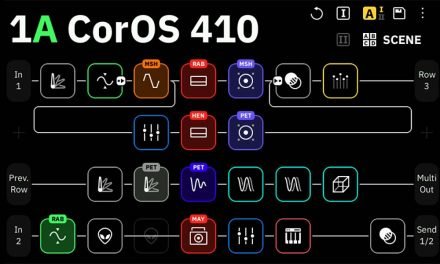
The app itself is a breeze to use. I didn’t even need to crack open the manual as I browsed through the various windows, safe in the knowledge that I couldn’t break anything. Of note, unlike many top-tier processors, you only have two options for signal path layout. But I’m pleased to report that these two options cover most bases. [Puns…] If you need more complex routing, you’d likely be looking at a dedicated processor, anyway.
You can save three presets for recall on the Katana, best accessed via an optional footswitch (which, unfortunately, I didn’t have on hand to test). The front panel functions offer multiple options, accessed by pressing the related button. For instance, in the app, I could choose from three different types of drive, each selectable by pressing the illuminated button next to the Drive knob.

The Line Out function is particularly clever, offering more flexibility than your standard direct injection (D.I.). The Rec option adds a bass sound similar to a distant-mic’d speaker cabinet to the XLR output, while Live offers a close-mic’d sound. Blend does exactly what it says on the tin, mixing the two for a balanced output suitable for various applications. Custom gives you three user-definable options, selectable in the software and accessible via the three-way LED button on the amp.
The Nitty Gritty
Around the back, you’ll find a fixed voltage power supply accessed via a standard IEC connector. The aforementioned Bluetooth connector hides under a rubber bung, and to its right, there’s a USB-A connector. I have to say, this “older” design seems a better choice than Mini or Micro USB. And between you and me, I’m not overly enamoured with USB-C for touring and pro audio equipment either. If only there were a better physical data connection method…
For patch and effect selection, as well as expression pedal usage, you’ve got two sockets for the foot controller for remote access to your tone selections. To the right of these, there’s a headphone output that doubles as a recording out – using this output disengages the speaker output, so no worries about disturbing the neighbours during late-night practice sessions.
Power Talk
Now, let’s address the elephant in the room – output power. I’ve seen some chatter online about the specifications being peak rather than RMS, so I went straight to the horse’s mouth and asked BOSS about it. Here’s what they had to say:
“Under standard conditions, the power outputs average 380W RMS at 4 ohms and 190W RMS at 8 ohms. The Katana-500 Bass Head has a thermal sensor that intelligently manages fan control. This results in comparatively stable peak power – more so than products with non-intelligent fan control. This is why we didn’t specify Watts RMS.”
Katana Bass Cabinet
Shifting air for the Katana 500 in review here is a matching high performance Katana bass speaker cabinet featuring a custom Eminence Neodymium 12” woofer driver and a Roland tweeter, paired with a custom crossover that features a level switch for the tweeter, should you wish to dial back the clarity a little. This is useful should you be running sounds with distortion that can sometimes sound a little harsh through high-frequency devices.
Robust locking speakON® connectors for connecting your amplifier and indeed daisy chain to another cabinet is possible. The Katana cabinet is rated with a nominal load of 8 ohms, thus a pair will be within the minimum load for the amplifier head, 4 ohms. Weighing in at 16.5Kg, the Katana cabinet isn’t too difficult to schlepp around; BOSS have included a single carry handle on the side and rubber feet.
To my ear, the cabinet has a balanced sound, though isn’t specifically FRFR. It’s mid-present tone in my studio when everything is run flat suggests to me that it will definitely cut through the mix in louder situation and, the powerful EQ options on the Katana head will have you easily dialling a tone suitable for your needs.
The Verdict
Wrapping up this review, the Katana 500, even upon brief examination, offers a staggering array of tonal variations suitable for a wide range of musical situations and genres. The feature set is comprehensive, yet I was impressed by how easily accessible the effects were, both on the front panel and in the application.

There’s a slight risk of option paralysis, but that’s par for the course with any multi-effect processor aimed at those who want dig deeper into their signal path creation capabilities. I did find some parameters a tad clunky to adjust, especially on my ageing laptop. It was occasionally tricky to nail down the exact amount of, say, gain I wanted on a drive effect without the levels ping-ponging between too high and too low.
But these are minor quibbles in the grand scheme of things. The BOSS Katana-500 Bass Head is a versatile solution with very few all-in-one offerings to even try to compete with it. Whether you’re a gigging pro or a bedroom virtuoso, this little powerhouse has something to offer. It’s not just an amp; it’s a Swiss army knife for bass players. And in today’s diverse musical landscape, that’s worth its weight in gold – or should I say, Katana steel?
I’d like to take this opportunity to convey my huge gratitude to all those involved in sending over a wealth of technical information for me to distill here.
Katana-500 Baas Head Specification
| Company: | BOSS Roland Corporation https://www.BOSS.info |
| Model: | Katana-500 Baas Head |
| Country of Origin: | Designed in Japan, Manufactured in Malaysia |
| Year of Origin: | 2022 |
| Warranty: | Refer to local outlet |
| Enclosure: | Metal shell |
| Configuration: | DSP programmable preamplifer and proprietary D Class Power Amplifer |
| Rated Output Power: | 380W RMS at 4 ohms and 190W RMS at 8 ohms - 500W Peak |
| Inputs: | One ¼” instrument input: -10 dBu (1 M ohms) |
| Accessories: | Power cable, Optional carry case |
| Dimensions: | Size: 298 x 212 x 96 mm (11-3/4 x 8-3/8 x 3-3/16“) |
| Weight: | Weight (total): 2.8 kg ( 6 lbs 3 oz.) |
| Price: | Katana-500 Bass Head $799.99 / £734.00 |

1×12 Katana Bass Cabinet Specification
| Company: | BOSS Roland Corporation https://www.BOSS.info |
| Model: | 1x12 Katana Bass Cabinet |
| Country of Origin: | Designed in Japan, Manufactured in Malaysia |
| Year of Origin: | 2022 |
| Warranty: | Refer to local outlet for warranty information. |
| Enclosure: | Wood cabinet, protective grill, handle and corners. |
| Configuration: | 1x12” Eminence Neodymium woofer and Roland tweeter with adjustable level switch - 8 ohms |
| Rated Output Power: | 500W Peak 250W RMS |
| Inputs: | Two speakON (Input, Link) |
| Other Features: | Ported cabinet |
| Accessories: | None |
| Dimensions: | Size: 534 x 456 x 380 mm (21-1/16 x 18 x 15”) |
| Weight: | Weight (total): 16.5 kg ( 36 lbs 7 oz.) |
| Price: | Katana Cabinet 112 Bass $699.99 / £717.00 |