

Fig 1. Gut shot

 Tom Lees’
AMP
LAB
This Article Was Originally Published On: February 3rd, 2015 #Issue 15.
Introduction
Growing up in my big brother’s shadow was cool … and hard. No matter what my brother did, he always took the time to invite me along, even though I was too young and geeky to really know what we were up to. One day he said, “We are gonna start a band.” I never looked back. In many ways, I am who I am because of his influence. Likewise, the Mesa/Boogie Prodigy is what it is because of its big brother, Strategy. So in many ways, I totally get Prodigy … except that I am not young … nor talented … nor do I have exceptional qualities, as the Prodigy name would imply. Okay, so we are nothing alike, except that we have a big brother.
Construction
The Prodigy is an extremely well-constructed bass amplifier with striking good looks, much like the Strategy. The Prodigy differs from the Strategy in that the Prodigy includes four KT88 tubes instead of the eight KT88 tubes of its big brother. Also, the Prodigy sheds the graphic equalizer. These differences result in a lighter, smaller form factor. Referring to Fig. 1, we see a marvel of engineering, neatly and tightly packing as much circuitry into a chassis as one can imagine.
One feature that I wish the Prodigy would have left behind is the blue glow that emanates through the vents. This amp is way to cool for such a kitchy feature as LEDs to illuminate the head cab. But again, this feature may appeal to others.
The Tone Stack
Let’s kick things off with a quick look at the Prodigy’s frequency response. Fig. 2 shows our “all controls at noon” setting vs. the “optimally flat” setting. Our measurements show a +/- 18.8dB 20Hz – 20kHz frequency response with all controls at noon. This response improves to +/- 4.84dB, 80Hz – 8kHz, for all controls at noon, with our optimally flat setting edging out all controls at noon my about 0.6dB at +/- 4.23dB, 80Hz – 8kHz.
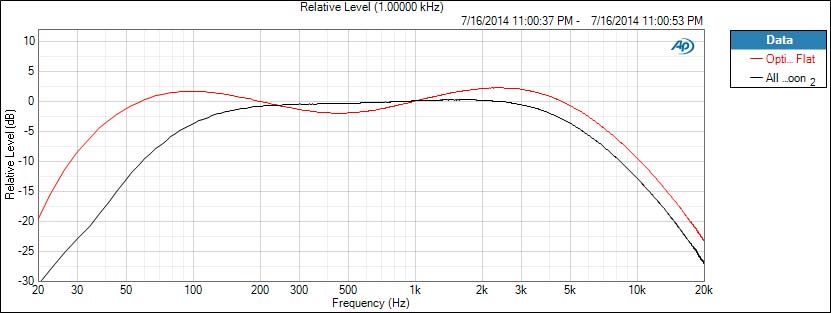
FIG. 2 All Controls at Noon v Optimally Flat
Yup, go ahead a blink … and then stare. The red trace is the optimally flat trace and the black trace is all the controls at noon. Note that the red trace appears to have a more pronounced midrange dip compared to the black trace. However, the red trace also has a more pronounced extension in the low frequencies, which makes up for the low-end roll-off of the all controls at noon setting, which occurs above 100Hz.
The optimally flat setting is achieved with the Bass, Middle and Treble controls at Max (full clockwise), and the Voice switch set to 2. But let’s not kid ourselves, here. If you want “flat,” set the knobs to their center detent position and call it good enough.
The Input EQ
Located just above the single ¼” input jack is an input select switch like that of the Strategy. This switch is a 3-position switch that allows a user to select between Active (10 kOhm input impedance 200Hz, 200 mVrms Sin), Normal (630 kOhm input impedance 200Hz, 200 mVrms Sin), and Bright. Note that these impedance measurements match up consistently with the Strategy input impedance.
Take a look at Fig. 3. We set the tone stack controls to their noon position and set the Voice flat. As with the Strategy, the Bright setting represented by the red trace, has the most extended top end. Correspondingly, the Normal setting (passive mode) represented by the black trace provides the most top end cut. Here, the Active position represented by the blue trace appears to be the same as the Bright setting with a pad.
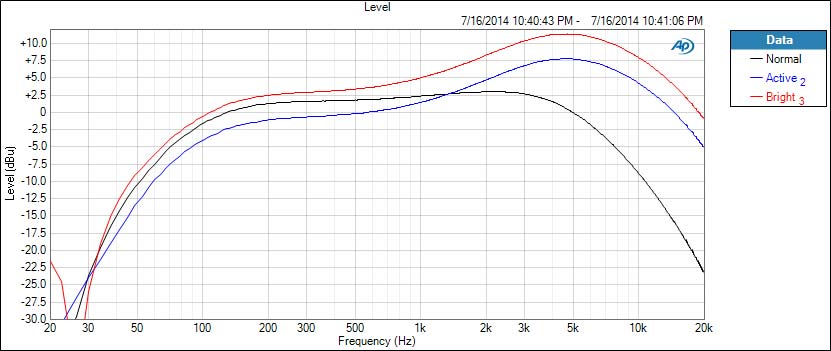
FIG. 3 Normal active bright switch
Interestingly, the Prodigy and the Strategy differ in the performance of the input select switch to a slight degree. To compare the two amps, we fired up the Strategy and the Prodigy. To make the amps as similar as possible, we bypassed the Graphic EQ on the Strategy. We also set the Strategy to half power (and set the impedance accordingly: we tested the frequency response at 4 ohms, so we plugged an 8-ohm load into the 4-ohm jack on the Strategy). Refer to Fig. 4 the Prodigy and Strategy appear near identical with the input select switch in the Normal position (all other EQ bypassed), up to about 1kHz. Beyond 1kHz, the Strategy (orange trace) has a steeper and faster high-end roll-off compared to the Prodigy (black trace).
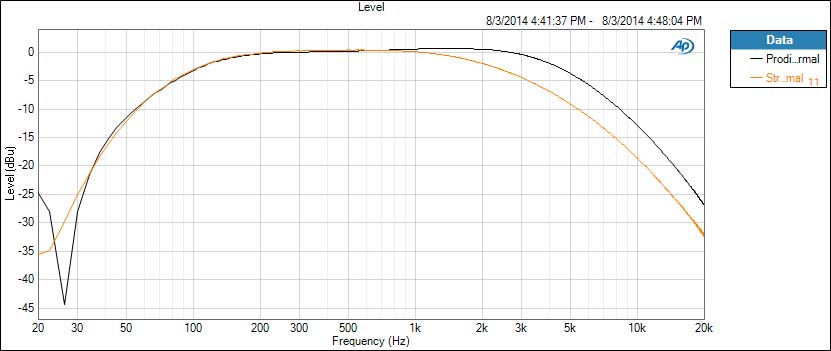
FIG. 4 Normal of Prodigy vs. Normal Strategy
Referring to Fig. 5 the Prodigy and Strategy again appear near identical with the input select switch in the Active position (all other EQ bypassed), up to about 1kHz. Beyond 1kHz, the Strategy (red trace) has a substantially flat response with a high-end roll-off 3dB point around 6kHz. Comparatively, the Prodigy (blue trace) exhibits approximately 5dB boost at about 5kHz.
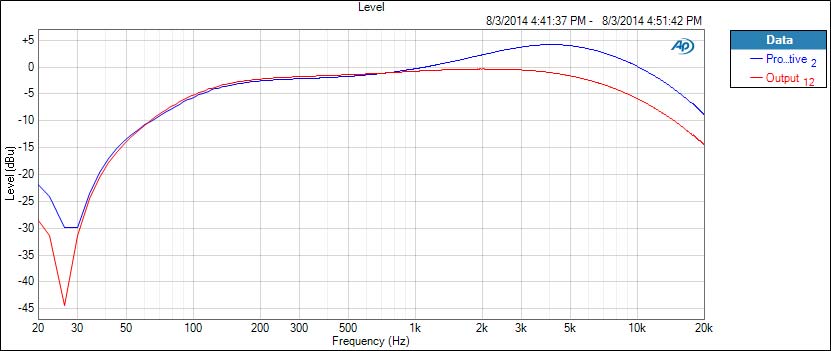
FIG. 5 Active Prodigy vs. Active Strategy
Referring to Fig. 6, the Prodigy and Strategy again appear near identical with the input select switch in the Bright position (all other EQ bypassed), up to about 1kHz. Beyond 1kHz, the Strategy (mustard brown trace) has a minimal treble “slant” upward with a high-end roll-off 3dB point around 12kHz. Comparatively, the Prodigy (red trace) exhibits over 8dB boost at about 5kHz.
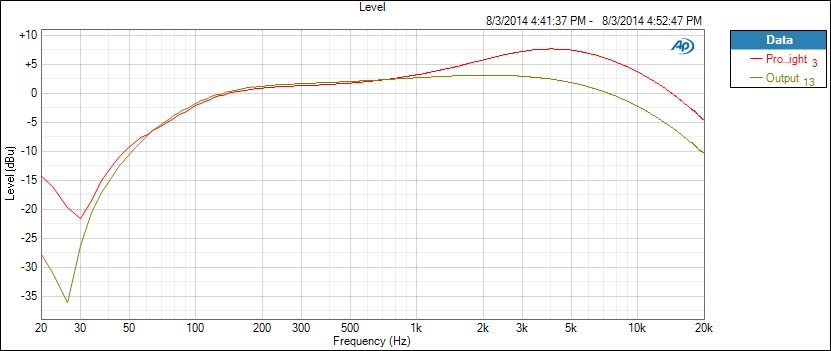
FIG. 6 Bright Prodigy vs. Bright Strategy
Voice
Referring to Fig. 7, the Voice control is a single-knob control that provides “presets” for the low end, mids, and treble. The single knob provides five discrete steps. Voice 1 (fully CCW) represented by the black trace provides boosted low end and a mid scoop. Voice 2 represented by the blue trace provides a subtle low end boost with a mild dip in the mids (around 300Hz). Voice 3 represented by the red trace is designated a “flat” setting. Use this setting to bypass the Voice control. Voice 4 represented by the green trace exhibits less low end compared to the previous Voice settings, but provides a gentle treble boost relative to the previous Voice settings. Voice 5 (fully CW) represented by the orange trace provides a similar low end response to Voice 4. However, Voice 5 also includes the greatest treble boost of the Voice settings. Note that the Voice control on the Prodigy tracks nearly identical to the Voice control on the Strategy.

FIG. 7 Voice
As with the Strategy, the Voice control affects the lows, mids, and highs differently than the EQ characteristics of the Input control switch. As such, these controls can be used alone or together with great effect, in as simple a user-interface as one could hope for.
Tone Stack
Taking a look at Figs. 8-10, we illustrate the tone control sweeps for Bass, Mid, and Treble, respectively. The Bass and Treble are “active” controls. Note in Fig. 8 that there is no high frequency effect, regardless of the setting of the Bass control. Likewise, as illustrated in Fig. 10, there is no low frequency effect, regardless of the Treble control setting. However, Fig. 9 demonstrates that the Mid control affects a broad frequency range, with an emphasis on the mid frequencies.
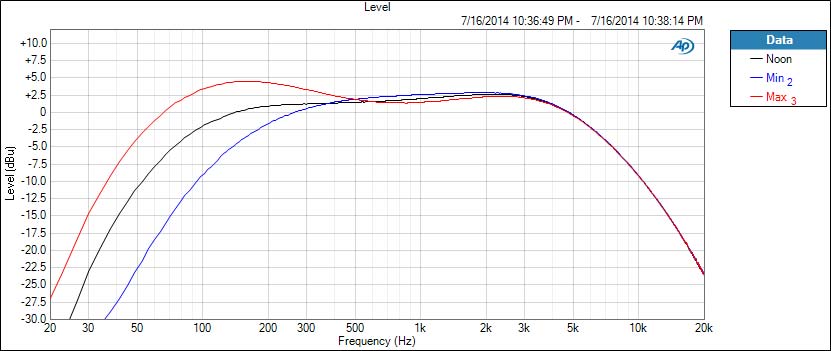
FIG. 8 Bass sweep
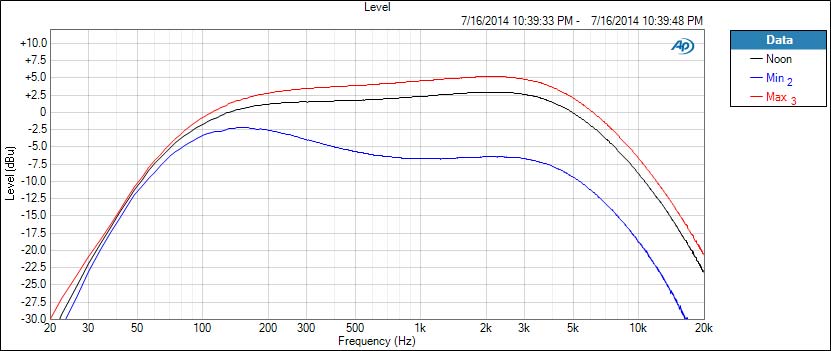
FIG. 9 Mid sweep
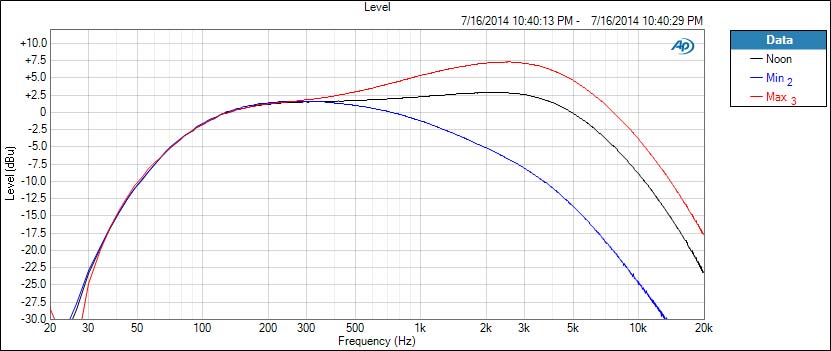
FIG. 10 Treble sweep
Output Power
Much like the Strategy, the Prodigy is an interesting amp to rate from a power perspective. As noted in our Strategy review, many amps start showing signs of distortion and clipping when the signal hits “rails” – i.e., minimum and maximum voltage levels that the signal can swing. Maximum power is thus often selected by finding the point where the peaks just start to clip and flatten off.
Instead of showing signs of hard clipping at the peaks, the Prodigy output starts altering the shape of the wave from a pure sine wave to something less symmetrical before the peaks are affected. This is not the “wave shaping” (soft clipping) that other manufacturers use to limit the hard rails in some class-D amps. Rather, it is something quite different.
Take a look at Fig. 11. This is a sine wave at 2% THD+N. Note that the wave shape looks like a clean sine wave. Comparing Fig. 11 to Fig. 12, we begin to see that the peaks are still nice and rounded. However, the transition from positive peak to negative peak, and from negative peak to positive peak, is beginning to look more straightened out at 6 % THD+N. Now, take a look at Fig. 13. By 8% THD+N, the distortion is clearly visible in the transitions from peak to peak. However, the peaks themselves remain rounded. Indeed, it is not until approximately 10% THD+N, as illustrated in Fig. 14, that we begin to see that the peaks are clipped. I am speculating here, but this looks to me like this behavior is indicative of the relatively cold bias, which was apparently selected by ear for the richest overall tone.
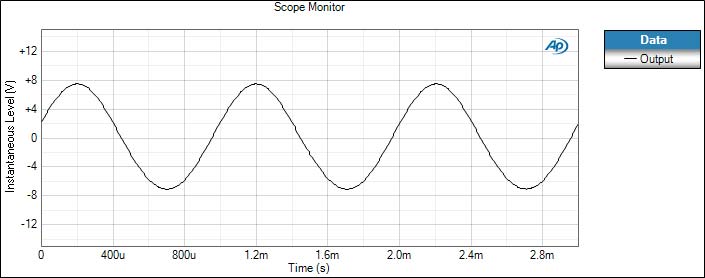
FIG. 11 2% thd+N scope monitor
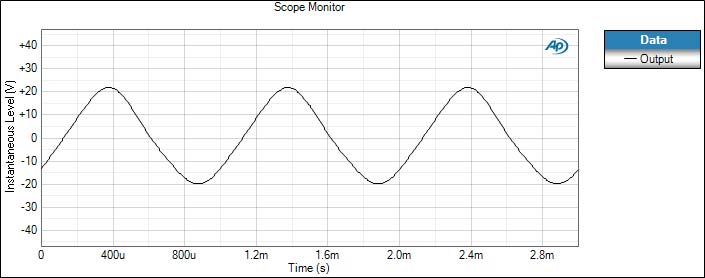
FIG. 12 6% thd+N scope monitor
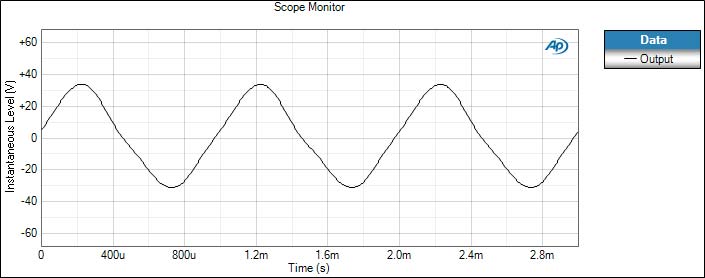
FIG. 13 8% thd+N scope monitor
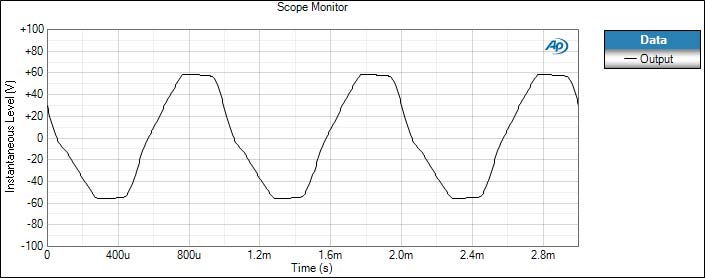
FIG. 14 10% thd+N scope monitor
Much like the Strategy, the nature of KT88 tubes did not lend well to the continuous testing module of our Audio Precision (“AP”) test system. In order to provide a usable measuring stick for continuous power, we tested old school – with an oscilloscope, meter, and hand calculator. Using this method, we measured 206 watts (10% THD+N filtered 20Hz – 20kHz; 395 mVrms 1kHz sin Input) at 8 ohm and 207 watts (10% THD+N filtered 20Hz – 20kHz; 395 mVrms 1kHz sin Input) at 4 ohm.
However, the automated AP tests for burst power yielded consistent, predictable results. Employing our standard methodology for burst power measurements, we recorded bursts of 319 watts (7.5% THD+N filtered 20Hz – 20kHz; 1kHz CEA 2006) at 8 ohm and, similarly, 317 watts (7.5% THD+N filtered 20Hz – 20kHz; 1kHz CEA 2006) at 4 Ohm. Note that whereas the Strategy includes a 2-ohm tap, the Prodigy includes only 4 and 8-ohm taps.
Bias
As described in greater detail in the Strategy review, the bias on the Prodigy is easy to set when replacing tubes. Simply set the bias switch to bias, and turn the potentiometer until an LED in the bias section goes black, then twist the potentiometer exactly ½ turn clockwise. Bias is set. Rock on.
Multi-Watt TM
The Prodigy features a “multi-watt” feature implemented as a Full/Half power switch that allows the user to select a desired power range. The Prodigy does not have the Lo setting of the Strategy, but it’s really not needed on this amp. In the Full position, all four KT88 power tubes are utilized. In the Half power mode, only two of the KT88 tubes are utilized. When using the Half power position switch, you can actually gain a bit more headroom by switching your cab to the next lowest impedance setting on the back of the amp. That is, plug an 8-ohm speaker cabinet into the 4-ohm jack.
Referring to Fig. 15, the gain of the Prodigy is illustrated for each switch position for an input stimulus of 400Hz swept from 1 mVrms to 1 Vrms at 8 ohms. The red trace shows a generally linear gain of 32dB until the point of hard clipping, where you can see a mild gain bump (around 700 mVrms in this test). The blue trace is the Half power setting with the impedance still at the 8 ohm setting. Note that the Half power setting is 6dB down from the Full power setting. Next, I moved the speaker jack to the 4-ohm tap (with an 8-ohm load). This result is the black trace. Note that the black trace is only 3dB down from the Full power setting. Neat. You actually can get three settings with this switch simply by changing the speaker load and speaker output jacks.
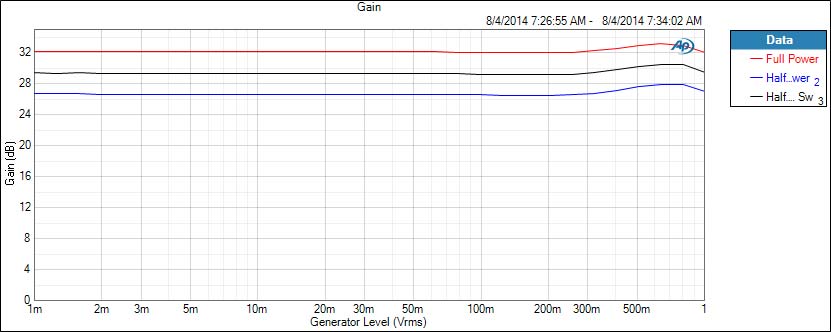
FIG. 15 Full power vs. Half power
Referring to Fig. 16, the harmonic distortion is illustrated as a function of output level for the same test conditions as used to generate the chart in Fig. 15. Note that the red trace is Full power, the blue trace is Half power with the load matched to the speaker output jack, and the black trace is the Half power setting with the load mismatched to the speaker out jack (8-ohm load into the 4-ohm jack).
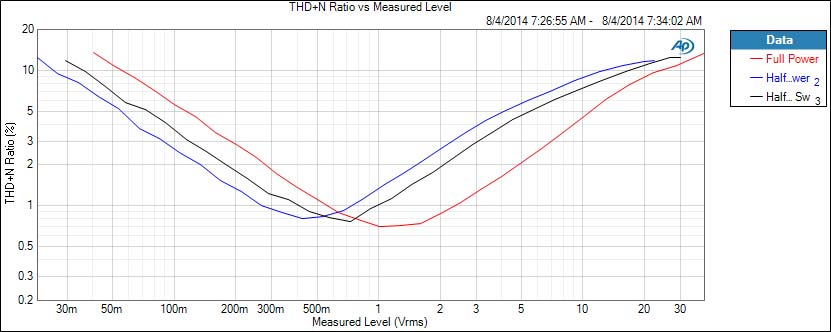
FIG. 16 Full power vs. Half power THD+N
Mute/Play/Silent Record
The Prodigy features the same 3-way toggle switch that performs Mute, Play and Silent Record as described in the Strategy review. As I previously stated, this is an incredibly nice feature that leaves you scratching your head wondering why every tube amp does not have this capability.
Solo
Referring to Fig. 17, the Prodigy stacks on top of all of its features, a Solo capability. The Solo control provides a pre-selectable amount of boost. The Solo control may be tied to a footswitchable control for additional flexibility. The Solo can be used as an extra master volume, as a control to account for mismatched gain of various passive and active basses, as a boost for solos, or whatever else your imagination allows. With 30dB of gain on tap, there is a lot of flexibility, here.
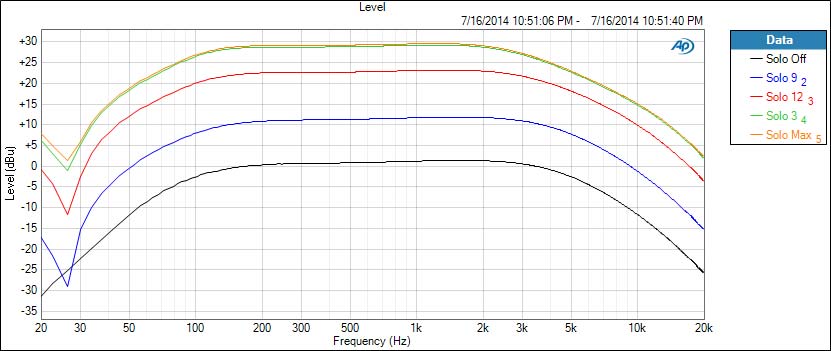
FIG. 17 Solo sweep
Conclusion
The Prodigy represents a real contender and a nice alternative to those that do not want the larger size and weight of the Strategy. With the flexibility of the Input Select switch, the Voice control and the tone stack, there is enough tone shaping to satisfy many players, without the need for the graphic EQ of the Strategy.
As with the Strategy, the variable-speed fan, no-load auto-sensing on the speaker jack outputs, the Solo feature, Input Select switch, and a host of other features make this amp a solid contender for the gigging musician, for the studio owner, for the bedroom player, and just about everyone in-between.


Mesa Boogie
Prodigy

ENCLOSURE
| Material: | Aluminum |
| Dimensions: | 16-1/4” W x 7-1/4” H (w/feet and handle) x 9” D |
| Weight: | 30.5 lbs |
| Rackable: | Yes |
PREAMP
| Inputs: | 1 x 1/4” |
| Mode: | Tube |
| Tubes: | 3x12AX7 |
| Input Impedance: | 634k Ohm 200 mVrms Sin 200 Hz Normal Input; 10k Ohm 200 mVrms Sin 200 Hz Normal Input |
| EQ Type/Features: | Bass, Mid, Treble; Voice Bright Switch on Input |
| Compressor/Limiter: | None |
| DI Output: | Balanced XLR with ground lift, level control, and pre/post switch on front panel |
| Effects Loop: | Yes, Series |
| Dedicated Tuner Out: | Yes, Series |
| Construction: | PCB and hand wired |
| Additional Features: | Mute/play switch; Solo boost; Multi-watt Switchable Power; Active Input Pad; Optional External Switching for Solo, Mute and Voice |
POWER AMP
| Mode: | Tube |
| Tubes: | 8xKT88 |
| Outputs: | 2 x 1/4” 4 Ohm; 1 x 1/4” 8 Ohm |
| Impedance Options: | 4, 8 jacks |
| Power Supply/Transformer: | Analog |
| Cooling System: | Fan |
| Line Voltage Options: | 120 Vms |
MEASUREMENTS
| Full Bandwidth All Controls At Noon: | 20Hz - 20kHz +/- 18.8 dB; 250 mV swept sin input |
| Limited Bandwidth All Controls At Noon: | 80Hz - 8kHz +/- 4.84 dB; 250 mV swept sin input |
| Limited Bandwidth (Optimally Flat): | 80Hz - 8kHz +/- 4.23 dB; 250 mV swept sin input |
POWER
| 4 | 8 | |
| Continuous Power: | 207 W | 206 W |
| Measured Voltage: | 28.8Vrms | 40.6 Vrms |
| Burst Power: | 317 W | 319 W |
| Measured Voltage: | 35.61 Vrms | 50.48 Vrms |
| Input Signal: | 536.3 Vrms | 537.8 mVrms |
| Wall Voltage DUT | 118 Vrms | 119.4 Vrms |
| THD+N: | 10% | 10% |
GENERAL
| Company: | Mesa/Boogie 1317 Ross St. Petaluma, CA 94954 www.mesaboogie.com |
| Country of Origin: | USA |
| Year of Origin: | 2014 |
| Warranty: | 5-year, transferrable |
| List Price: | $1.799.00 |
| Street Price: | $1.799.00 |
| Test Unit Options: | Footswitch ($125) |
| Accessories: | Padded slip cover (standard), Footswitch (optional) |
| Price as Tested: | $1,924.00 |
| Available Colors: | Black |
| Available Options: | Footswitch |
| Acquired From: | Mesa/Boogie |
| Dates: | March to July 2014 |
| Locales: | Ohio |
| Test Gear (in-hand review): | F bass VFP-4, Carvin PB5, Sadowsky WL4, Zon Legacy Elite IV, MAS-210Flex, SVT, SVT-810e, Markbass CL108, numerous other Mesa/Boogie heads and cabs |
TEST RESULTS
1-5 (unacceptable to impeccable)
In-hand
| Features: | 4 |
| Tonal Flexibility: | 4 |
| Ease of Use: | 4 |
| Aesthetics: | 4.5 |
| Tone: | 4.5 |
| Value: | 3.5 |
In-hand Score 4.08average
On-bench Score 4.06average
On-bench
| Internals parts | 3.5 |
| External parts | 4 |
| Overall assembly | 4 |
| Ease of repair | 4 |
| Instructions/manual | 5 |
| Quality per price | 4 |
| Layout/cooling | 4 |
SONIC PROFILE:
Low: Warm and rich, but controlled; can get as big as you’d want
Mids: Wide range of tones available; great clarity and harmonics
Highs: Rich and full; harmonically complex; can dial in a little or a lot
TONE-O-METER:
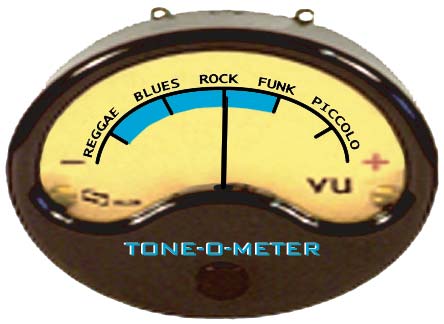
The Prodigy covers a lot of ground, tonally, and packs more power than you’d expect. Reminiscent of the glorious Bass 400/400+, but a bit more full and solid.